
A Holistic Approach to Managing Spinal Curvature
Scoliosis, is a condition characterised by an abnormal curvature of the spine that can range from mild to severe, affecting posture, mobility, and overall quality of life. While scoliosis is often managed through observation, bracing, or surgery in severe cases, osteopathy offers a complementary and non-invasive approach that can help patients alleviate symptoms and improve function. In this blog, we will explore how osteopathy can support individuals with scoliosis and contribute to better spinal health.
Understanding Scoliosis
Scoliosis involves a lateral (sideways) curvature of the spine, often accompanied by rotation of the vertebrae. The condition can develop during childhood or adolescence (idiopathic scoliosis), though it can also occur in adults due to degenerative changes, congenital abnormalities, or neuromuscular conditions.
A scoliosis may be referred to as structural or functional
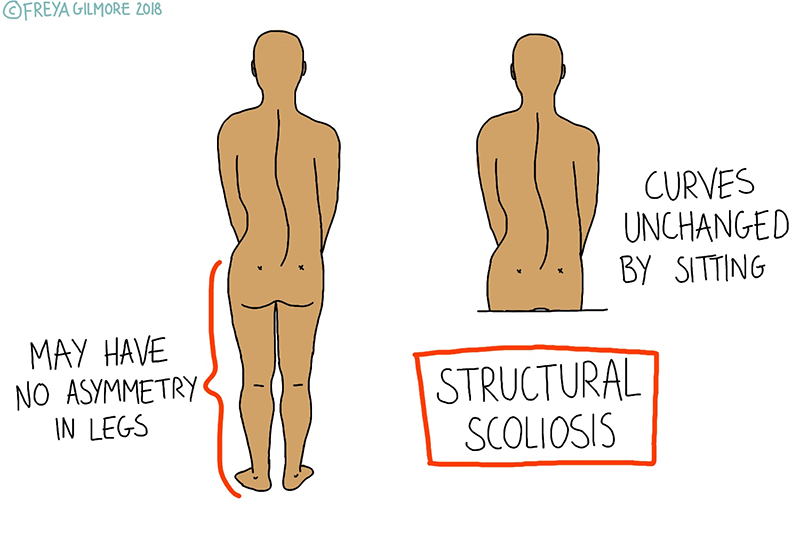
Structural scoliosis
When viewing the back from behind, if there is any kind of sideways curve, this is a scoliosis. Typically a curve further down the back will correct itself before reaching the head. This is an S-shaped curve, and serves the purpose of keeping the head level. Sometimes the curve is just a C-shape, which may be more significant from a clinical perspective.
These curves remain when sitting.
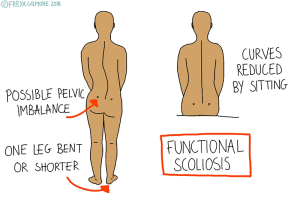
However, a functional scoliosis may be easier to explain. Typically, these will disappear on sitting, but be present on standing. This is because the cause is not within the spine, but in the lower body and may be temporary if compensating for other issues such as protecting from pain.
One of the most common statements I hear in practice is “I have (or I’ve been told I have) a scoliosis”. I have now been in practice for 25 years and can say with absolute assurity that due to our habits and our genes we all have curvatures of the spine, that however does not mean we all have a permanent scoliosis.
The severity of scoliosis is measured by the degree of spinal curvature and can be categorised as “C or S” shaped that may be typical or in reverse:
- Scoliosis: A curvature greater than 10˚ is considered to be a scoliosis
- Mild scoliosis: Typically involves a curve of less than 20˚ and often requires minimal intervention.
- Moderate scoliosis: A curve between 20 and 40˚ may require more active management, such as bracing.
- Severe scoliosis: A curve of over 40˚ can lead to significant physical changes and may require surgical intervention.
Common symptoms of scoliosis may include:
- Uneven shoulders or hips
- Prominent ribs or shoulder blades
- Back pain or discomfort
- Reduced range of motion
- Postural changes
- In severe cases affects upon our physiology – Cardiovascular, digestive, respiratory systems etc
- Affects upon psychology – depression and anxiety
How Can Osteopathy Help with Scoliosis?
Using hands-on techniques Osteopaths encourage the best function of the structure supporting the body’s natural innate healing processes. For individuals with scoliosis, osteopathy can offer benefits, including pain relief, enhanced musculoskeletal function and benefits to the osverall physiology.
- Relieving Pain and Discomfort
One of the primary goals of osteopathic treatment for scoliosis is to help manage pain and discomfort associated with the condition. Scoliosis can cause muscle tension, joint stiffness, and nerve compression, leading to pain. Pain may be experienced in the back, shoulders, and sometimes the arms and legs.
- Soft tissue massage: Osteopaths use gentle massage techniques to relax tight muscles, reduce muscle spasms, and improve blood flow to the affected areas. This can help alleviate pain and enhance comfort.
- Joint articulation and mobilisation: Gentle manipulation of the spine and surrounding joints can help improve mobility and reduce stiffness, making it easier to manage the daily discomfort that often accompanies scoliosis.
- Improving Posture and Spinal Alignment (See blog March 25: “I’ve got terrible posture”)
While osteopathy cannot reverse the curvature caused by scoliosis, it can help improve the function of the scoliosis and surrounding structures by addressing the compensatory and adaptive changes made by the body to accommodate the scoliosis. Over time, these osteopathic interventions can contribute to greater function and reduce the impact of the spinal curvature upon the wider physiology.
- Postural easing: Osteopaths assess the body as a whole, identifying areas of disfunction that may be exacerbating the curvature. By working on these areas, they can help reduce the strain on the spine and encourage a more balanced posture.
- Exercise prescription: Osteopaths often recommend specific exercises to strengthen the muscles that support the spine, as well as to improve flexibility and balance. Strengthening these muscles can help stabilise the spine and may help to reduce the progression of the curve.
- Enhancing Mobility and Function
Scoliosis can limit the range of motion and affect daily activities, particularly if the curvature is significant. Osteopathy aims to restore and enhance mobility, making it easier for individuals with scoliosis to maintain an active lifestyle.
- Stretching techniques: Osteopaths may use targeted stretching to improve flexibility in the muscles and ligaments around the spine. This can help reduce stiffness and increase the range of motion in the back and shoulders.
- Functional movement training: Osteopaths may also work with patients to improve their functional movement patterns, such as bending, lifting, and walking. By promoting better movement habits, osteopathy can help reduce the risk of strain and injury.
- Supporting Long-Term Health and Wellbeing
Osteopathy takes a holistic approach to health, focusing not just on the symptoms of scoliosis but on the overall wellbeing of the individual. This includes providing advice on lifestyle factors that can support long-term spinal health.
- Lifestyle and ergonomic advice: Osteopaths can offer guidance on how to adapt your environment and daily activities to reduce strain on the spine. This might include advice on proper sitting and standing posture, as well as tips for setting up a workspace that supports spinal health.
- Stress management: Chronic pain and discomfort from scoliosis can lead to stress and tension, which in turn can worsen muscle tightness and pain. Osteopaths may recommend techniques to help manage stress and promote overall wellbeing.
When to Consider Osteopathy for Scoliosis
Osteopathy can be particularly beneficial for individuals with mild to moderate scoliosis, especially those who are looking for a natural, non-invasive approach to managing their condition. It can also complement other forms of treatment, such as physiotherapy or medical care, by providing additional support for pain relief and improved function.
There is no necessity to consult your GP prior to starting Osteopathic Treatment for a scoliosis. If however your osteopath feels that your condition is beyond their scope of expertise they will direct you to your GP to discuss the situation.
It is important to consult your GP if you have a severe scoliosis or one that seems to be developing rapidly or if you have other underlying health conditions.
Conclusion
Scoliosis can be a challenging condition to manage, but with the right approach, it is possible to help you manage your symptoms and improve your quality of life. Osteopathy offers a gentle, holistic method of treatment that addresses both the physical discomfort and the broader impacts of scoliosis. By focusing on pain relief, postural adaptation and overall function; osteopathy can help you maintain an active, healthy lifestyle despite the challenges of living with scoliosis.
If you or a loved one is dealing with scoliosis and are interested in exploring how osteopathy can help, consider consulting a registered osteopath. Together, you can develop a personalised treatment plan that supports your journey to better spinal health and overall wellbeing.
If your back goes out more often than you do call The Osteopathy Centre
020 3928 6999