
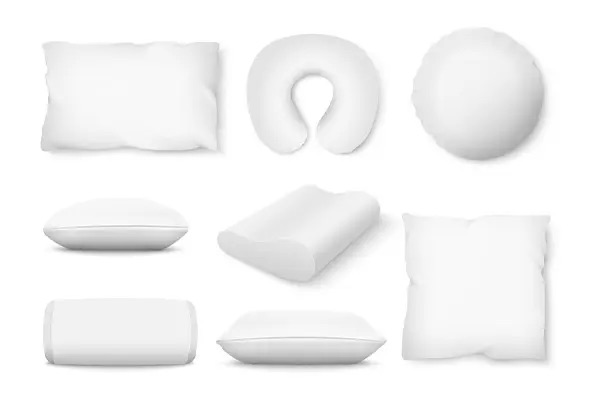
What type of pillow should I use? An Osteopath’s Perspective
One of the questions asked most frequently in clinic, is: “What’s the best pillow for my neck?” It’s an excellent question, but one without a simple answer.
The reason it’s asked so often is because many people wake up in discomfort and assume that the pillow they are using is to blame. Indeed the pillow may be part of the problem however it is being sedentary through the night that is often the main reason for morning neck and back pain and stiffness. None-the-less pillows can make a big difference and deserve to be discussed.
As with most aspects of life, there’s no one-size-fits-all answer to the great pillow debate. The best pillow/s for your neck is/are the one or two pillows that support your individual anatomy and sleeping position, which of course is unique to you.
My preference is two down pillows whilst my wife prefers two (or more) memory foam pillows. If we were to swap neither of us would find comfort and would struggle to sleep and likely get up un-refreshed, in pain and grumpy (that never happens).
Based upon my ‘rigourous’ research (sample size of 2 – my wife & me), the experiences of my patients and the vast array of marketing on TV & social media platforms, it’s clear that the world of pillows is a minefield.
Let’s break it down.
What is the Golden Rule for pillow use? Fill the Gap!
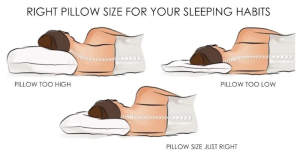
The key function of your pillow is to fill the gap between your head and the mattress, so that your neck remains supported and neutral and you feel comfortable, whether you’re lying on your back or side.
As we all vary in size, shape, flexibility and function this gap varies significantly from person to person.
Many people sleep with either too much height (stacking two or three pillows, forcing the neck in to a side bend when side lying or flexed forward if on their back – supine). On the other hand some people don’t have enough support (allowing the neck to drop, compress and strain). Neither option is ideal and a new pillow set up should be found.
What Affects Pillow Choice?
When helping patients choose a suitable pillow, here are a few factors I encourage them to consider:
- Body shape and shoulder width
Do you have wide or narrow shoulders? The wider the shoulders, the greater the gap when lying on your side. Wider shoulders will require thicker or more pillows whilst narrow shoulders will require thinner or less pillows. - What is my sleeping position?
Side sleeping is considered to be the most appropriate. Back sleepers need less height than side sleepers. Stomach sleeping isn’t recommended for neck health, but some find it comfortable. If it’s unavoidable, a very flat pillow or no pillow at all is recommended to avoid stress and strain. - Spinal health and age
A young, flexible spine may tolerate more variety, an older or osteoarthritic cervical spine may however have reduced mobility and be more sensitive to poor pillow support. This could result in becoming stiffer and more painful by morning. - Mattress firmness (another minefield)
A firm (orthopaedic) mattress doesn’t allow your shoulder to sink as much, increasing the gap between your head and mattress. A supportive mattress may require less pillow height. Like pillows, mattresses are also a minefield with a vast array of choices from high quality products to heavily marketed choices from companies making fantastical claims about their products. I always advise patients to spend as much as is affordable on a quality product rather than falling for marketing hype.
Neck pain exacerbated by poor pillow set up is a common complaint. I sleep in different positions, swapping from side to back all night, What should I do?
Most people change position several times during the night. So how do we support the neck appropriately in all of the sleeping positions you end up in?
This is a conundrum and comes down to trial & error until you find the pillow set up works for you. Unfortunately this can become expensive as you try memory foam, contoured, feather or orthopaedic pillows etc.
If you’ve ever slept in a hotel, B&B or a friend / relatives house and found the pillows there to work for you ask about them so you can try to find them for yourself.
Where Should I buy a pillow?
Online purchases aren’t recommended unless you are able to try the product at home and can return it for a full refund if it is unsuitable.
Ideally it is best to go to a good shop with a selection of pillow options for you to try before you buy. A good returns policy here would also be ideal.
How Often Should I Change My Pillow?
Surprisingly it is recommend that you should change your pillow every 1–2 years. This is for both structural support and for hygiene purposes.
Pillows accumulate sweat, dust mites, bacteria and dead skin over time, which can trigger allergies and affect your sleep quality. Make sure you clean them regularly to help preserve their use.
As feathers or foam degrade, your pillow looks limp, no longer bounces back and lacks the support it once offered it’s probably time to find yourself a new pillow.
How do I Dispose of Old Pillows Responsibly?
If you’re replacing your pillows, don’t just throw them in the bin. There are more sustainable options:
- Donate to animal shelters
Many rescue centres and kennels accept old pillows, cushions, and duvets for pet bedding. Ask what their donation policy is. - Repurpose at home
Use them as stuffing for DIY projects such as, pet beds, draught excluders, or padding for storage and transport. - Recycle textiles
Some local councils and recycling centres offer textile recycling schemes where pillows are accepted. Check your area’s guidelines. - Compost the filling
If your pillow is made with natural materials like feathers, down, or wool, you can compost the filling. Just remove any synthetic fabric first. Local allotments may be interested.
Recycling or repurposing your old pillows helps reduce textile waste and gives your items a second life.
Final Tips for Choosing a Pillow
- Focus on quality & support, not brand hype.
- Lie comfortably on your side. If possible ask someone to look at your spine to see if you are in a neutral position whilst using your pillow.
- Experiment with different pillow types before investing in a new one.
- If you wake with neck pain or stiffness, your pillow may be part of the problem.
When in Doubt — ask your Osteopath.
At The Osteopathy Centre in Whetstone, Walthamstow & Woodford, I regularly advise patients on sleep posture and pillow choices based on their clinical presentation. If you’re unsure whether your current set-up is helping or hindering your recovery, bring it up at your next appointment.
Because the right pillow isn’t just about comfort, it’s about giving your neck the support it needs to rest, repair, and stay pain-free.
Good Night, Sleep Tight