
A restful night’s sleep is vital to support your ability to heal, restore, and maintain your health and vitality. From an osteopathic point of view, the quality of your sleep directly affects your posture, musculoskeletal health, and overall wellbeing by allowing all of your systems to rest and recuperate.
Is it My Mattress That is Causing My Pain?
At The Osteopathy Centre, I often see patients whose aches and pains are aggravated by something as simple as the wrong mattress. Understanding how your sleeping surface supports your body can make a world of difference to your comfort health and recovery.
Sometimes however its not the mattress but simply the fact that one has been sedentary for too long allowing inflammation and muscular tightness, a cycle that can perpetuate in to bigger health issues.
e.g. Wake up – Sit for breakfast – Sit to commute – Sit at work- Sit to commute – Sit for meal – Sit for TV – Bed
Why Does Your Mattress Matter So Much?
During sleep, your muscles relax, your joints decompress and all of your systems have an opportunity to recover. For this healthy process to happen most effectively, you should ideally remain in a neutral, supported position with the freedom to comfortably move throughout the night.
When a mattress is too firm or too soft, the spine can twist, flex or extend possibly leading to:
- Morning stiffness
- Musculoskeletal Pains and Tension
- Restless or interrupted sleep
- Postural Strains
Choosing the right mattress can help you to maintain your structure and function supporting your ongoing health and wellbeing between appointments at The Osteopathy Centre.
What are the Common Mattress Types and Their Effects on the Body?
Memory Foam
Pros:
- Excellent for contouring and pressure relief; reduces strain on joints.
Cons:
- Can feel too soft for some; may trap heat.
Osteopathic insight: Ideal for people with joint pain or muscle tension, as the foam molds to your body’s natural curves.
Personal Experience: Like sleeping in a marshmallow – Hot & too squishy making it harder to turn over.
Latex
Pros:
- Naturally supportive, breathable, and long-lasting.
Cons:
- Heavier and often pricier.
Osteopathic insight: Offers a balanced mix of firm support and gentle cushioning, ideal for maintaining spinal alignment.
Pocket sprung & Open sprung
Pros:
- Supportive, contouring to the body with good airflow. The more springs the better the support.
Cons:
- Can develop uneven wear and pressure points over time.
Osteopathic insight: Works well if you prefer a firmer, more structured feel. It’s good to have be a quality top layer for optimal comfort.
Personal experience: I use a top quality pocket strung mattress and find it to be comfortable and supportive. Even though it is reaching the end of its lifespan (according to mattress experts) it remains in great condition and gives me a great nights sleep every night.
Open sprung mattresses tend to be cheeper & more mass produced. There are some that are ok but generally I’d advise against these.
Hybrid
Pros:
- Combines coils with foam or latex layers for support and comfort.
Cons:
- Quality varies—investing in a good one makes a big difference.
Osteopathic insight: Often the best all-round option for most body types and sleep styles.
How do I match my Mattress to my Sleeping Position?
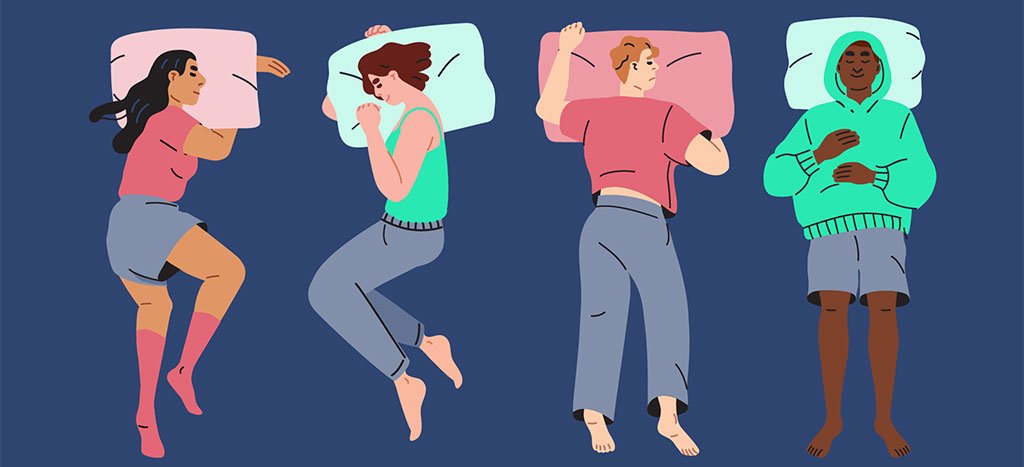
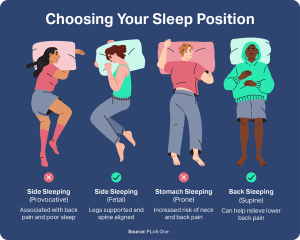
Your preferred sleeping position effects the strain placed upon your body systems and general comfort through the night:
Back Sleepers
- Choose a medium-firm mattress to support the lumbar curve.
- A small pillow under the knees can ease pressure on the lower back.
- Back sleeping can be a comfortable neutral position unless the mattress is too soft.
- Back sleeping can make snoring worse – not great for partners!
Side Sleepers
- A slightly softer mattress allows your shoulders and hips to sink comfortably while keeping the spine neutrally positioned.
- Use a pillow that fills the space between your head and the mattress to support your neck. (See my pillow blog for more details)
- A small pillow between the knees can also reduce strain and aid a comfortable nights sleep.
Stomach Sleepers
- This position often strains the neck and lower back and should be avoided if possible.
- If you can’t change your habit then use a thin pillow and a supportive mattress that prevents your hips from sinking too deeply, extending you neck and lower back.
Combination Sleepers
- Choose a responsive mattress (like a latex or hybrid) that adjusts as you move.
- SLEEPING POSITION IMAGE (Note: Since we cannot include images in the text, this serves as a text marker.)
What are good Osteopathic Tips for Better Sleep?
Replace your mattress every 7–10 years, or sooner if it’s sagging or uneven. If your bed frame is worse for wear consider replacing that too.
- Don’t fall for the social media hype: There are often dramatic claims of the benefits products can offer. These claims may benefit some but certainly not all so do your homework to see if the product really does what its maker say and that it is right for you. If it sounds too good to be true it probably is.
- Spend as much as you can afford on the best quality you can find for your money. (The January sales can be a good time to pick up a great deal. That’s what I did).
- Check your pillow height—your head and spine should stay aligned. (See previous Blog)
- Address your habits, punctuate your day with stretches & movement so that when you go to bed it’s not after a long cycle of being sedentary.
- Talk to your Osteopath an The Osteopathy Centre if you regularly wake up feeling stiff, achy or sore. Your mattress might be part of the issue, but it’s important to address any underlying structural and health issues too.
How to Support Your body, Night After Night
A well-chosen mattress is more than a comfort item, it’s a tool for your long-term health. From my osteopathic perspective, my goal is to help your body (your anatomy & physiology) to function freely without pain and to rest deeply in order to help overall health and recovery.
If you’re struggling with poor sleep, back or joint pain or muscular stiffness in the morning, The Osteopathy Centre is here to help. I can assess your posture and function and help identify stress and strain points, and advise you on your sleeping set up.
If your back goes out more often than you do, book an appointment at The Osteopathy Centre today to help you wake up feeling great every day.