

What Happens in Vagus doesn’t stay in Vagus!
Vagus nerve fast facts
- The Vagus nerves are the 10th (X) of 12 pairs of cranial nerves
- Its name is derived from the Latin ‘vagary’ which means wandering
- It starts in the brainstem’s medulla and travels down the side of the neck, into the chest and abdomen where it branches out to many visceral organs including the heart, lungs, oesophagus, pancreas, and intestines. (It wonders like a vagrant to many destinations).
The Vagus nerves role in the body?
- The vagus nerve is a two-way communicator; it transmits signals from the brain to the destination structures and visa versa.
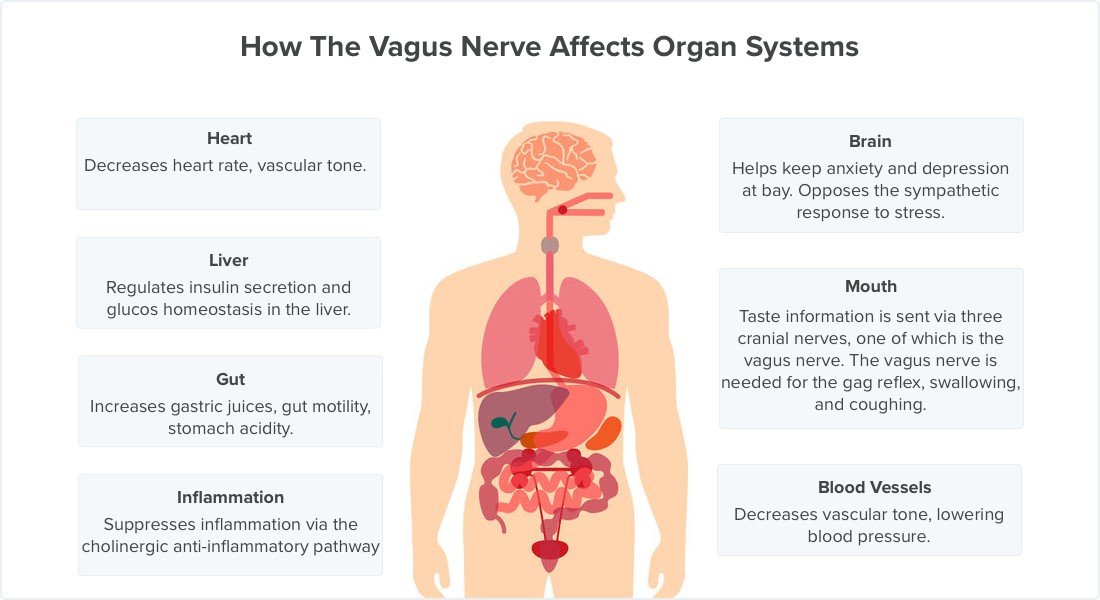
- It regulates the immune response, hunger hormones and food intake, anxiety levels, and Inflammation levels
- The vagus impacts more than just physiological processes. When one says something is “getting on my nerves” or that one has a “gut feeling”, it is the vagus nerve that is being influenced
- It triggers the parasympathetic nervous system responsible for calming organs after the stress response or ‘fight-or-flight’ adrenaline response to danger – our “rest and digest” or “feed and breed” actions
- This branch of the nervous system is not under conscious control.It helps regulate heart rate function, speech, sweating, blood pressure, digestion, production of glucose, breathing and many other function
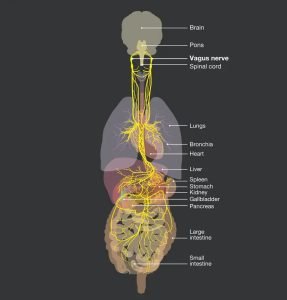
A well-functioning vagus nerve is integral to brain-body communication, helping to maintain balance (homeostasis) and regulating organ activity. Research has shown that the vagus nerves’ health may be the missing link in treating many chronic conditions, including inflammatory illnesses such as arthritis.
Vagal Tone
Vagal tone refers to the nerve’s activity; research shows that a high vagal tone improves the body’s ability to regulate blood glucose levels, reset the immune system and turn off inflammation, reducing the likelihood of illnesses like diabetes, cardiovascular disease and stroke. In contrast, studies have linked persistent low vagal tone with chronic inflammation, damage to blood vessels and organs.
Signs and symptoms of low vagal tone
- Indigestion
- Gastrointestinal bloating and IBS
- A hiatus hernia
- Loose stools
- Stress, fatigue and anxiety
- Shortness of breath and prolonged hiccups
- Migraine headaches
- Hypertension (high blood pressure)
Measuring vagal tone
When we inhale the heart rate slightly speeds up and when we exhale it slows down, the vagus nerve controls the heart rate via electrical impulses to the heart’s sinoatrial node. Doctors can measure the vagal tone and cardiac health, with the difference between the inhalation and the exhalation heart rates—the more significant the difference, the higher the vagal tone, which is better for health.
Causes of low vagal tone
- Excessive alcohol consumption
- Overeating spicy food
- Poor sitting posture or “tech neck”
- Overstimulation of the vagus nerve can cause shortness of breath and prolonged hiccups.
- Stress, fatigue, and anxiety can stimulate the nerve (it’s a vicious cycle).
Benefits of high vagal tone
- Ability to relax more quickly after a stressful event
- Less anxiety
- Better blood sugar regulation
- Decreased risk of stroke and cardiovascular disease
- In most cases lowers blood pressure
- Better digestion because of proper production of digestive enzymes
- Fewer migraines
- Less likely to experience mood disorders or depression.
Osteopathy & the Vagus
Osteopathy can also be potent in helping manage vagal tone. From the opportunity to relax calmly & the psychological effects of physical touch through to the hands on musculoskeletal & visceral techniques, there are many ways in which Treatments at The Osteopathy Centre may influence Vagal function and help you.
Self-help to improve vagal tone
The vagus nerve modulates the connection between respiration and heart rate, which means mind-body practices such as guided breathing exercises can slow heart rate and lower blood pressure.
A 2016 study reported that slow abdominal breathing breathing was the most effective self-practice to increase vagal tone and benefit wellbeing. Participants in the study effectively managed prehypertension (high blood pressure) and improved their stress response whether that was ; fight, flight, fright or faint using this simple activity. Regular deep breathing is integral to many mind-body practices; somatic movement, mindfulness meditation, yoga, tai chi, Qi Gong and some Pilates. It’s also used in chanting, repetitive prayer and by many singers too.
How breathing helps, here’s the science bit:
Any deep, slow diaphragmatic breathing stimulates the vagus nerve, which in turn, activates the parasympathetic nervous system, remember thats the “rest-and-digest” part, it signals the heart to slow down, which calms the nervous system. The vagus nerve connects all of this signalling and triggers the neurotransmitter acetylcholine to release, which tells the lungs to breathe, literally giving us the breath of life.
Breathing exercise for the vagus nerve
If you feel under pressure, are stressing about a deadline or about to blow a fuse, or need to relax a little, try this simple and easy breathing exercise.
- Inhale for a count of 3 then immediately –
- Exhale for a count of 3
- Pause (wait) at the end of exhaling for a count of 1
- Repeat 6 times then breath normally for 20 seconds and then repeat the process
Tip: Try to only breath in & out through your nose.
Note: The body’s internal alarm system which activates a stress response is triggered by fast and shallow breathing, making the body think it’s under attack, getting it ready to react with a fight, flight, fright, or fainting response. Slowing down your breathing will help to deactivate this reaction.
If your back goes out more often than you do or your Vagus nerve has wandered off, Call Alex Lubel BSC Hons, Registered Osteopath in London at The Osteopathy Centre.