
Is heel pain getting you down? If so, you’re not alone.
Plantar fasciitis; inflammation of the tissue supporting your foot arch, is a common complaint for both active and sedentary individuals. While stretching and icing can offer some relief, a professional and personalised approach is key to long-term recovery. Here’s how Alex Lubel from The Osteopathy Centre in Whetstone, North London, may be able to help you walk pain-free again.
Understanding Plantar Fasciitis
Plantar Fasciitis usually has a gradual onset of stabbing pain under your heel with pain being worse in the mornings upon initial weight bearing when getting out of bed. It arises from overuse or strain of the plantar fascia, a band of tissue connecting your heel bone to your toes.
The experience is of sharp pain in the sole of the foot especially towards the heel. This problem can become chronic if it’s not resolved in the early inflammatory stage and can be very debilitating. Research shows that the collagen fibres of the fascial connective tissue start to suffer from wear and tear or degeneration as the condition becomes chronic.
Causes of Plantar fasciitis
- Calf muscle tension – particularly if there’s lack of flexibility in the ankle.
- Overuse – the plantar fascia is stressed by a suddenly. increasing the intensity or duration of higher impact from walking or running or by being on your feet for prolonged periods.
- Weak foot arches or foot shape – those with high arches or flat feet often suffer more.
- Poor footwear – thin soles, regularly wearing high heels or wearing shoes which have no arch support or are not cushioned.
- Being overweight, this puts more force through the plantar fascia.
- Buttock muscle weakness – gluteus medius is an important buttock muscle stabilising your pelvis. When it is weak, your pelvis may drop down a little influencing the mechanics of your legs resulting in less efficient weight-bearing, affecting your foot and thus putting extra pressure on your plantar fascia.
- Direct trauma to the plantar fascia – e.g. hard heal landing on an uneven hard surface
Treatment of Plantar Fasciitis
Where an Osteopath Steps In
Unlike self-care methods that just address symptoms, your osteopath will take a broad whole body (holistic) approach.
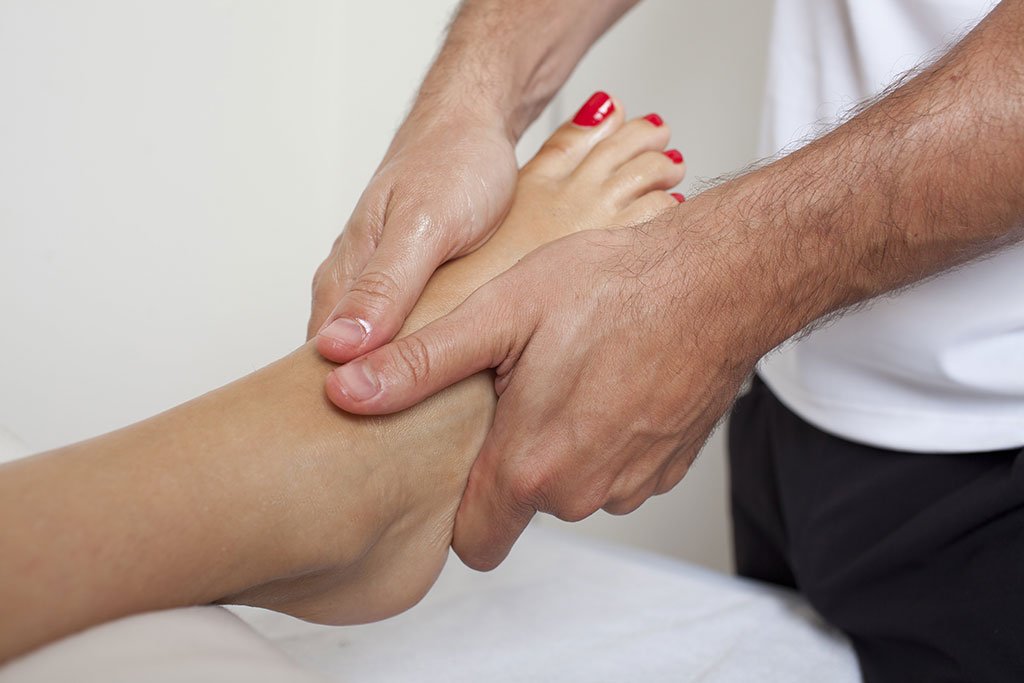
Osteopathic treatment will involve carefully assessing the biomechanical chain from the foot up to the back and beyond as appropriate, helping your osteopath to understand which areas may be causing the problem and need addressing. Your osteopath will then recommend a treatment plan to suit your needs including soft tissue therapy, joint mobilisation, and exercise recommendations.
What you can do
- Stretching – Leg, Buttock and low back stretches are very important.
- Plantar fascia, self massage – best done sitting down, you can place a tennis ball under the sole of your foot and gently roll the ball up and down the inside arch of the foot for about a minute and repeat at regular intervals throughout the day. You may feel a little tenderness so it’s important that you’re gentle. You can change the duration and pressure as the symptoms ease.
- Rest your foot regularly.
- Try to address your weight if needed.
- Exercise – cut back or ideally stop weight bearing exercises such as running in favour of cycling or swimming for a few weeks while the problem is acute. Warm up properly before and exercise and make sure you stretch out afterwards especially your calf, hamstring, quads & gluteal muscles. Avoid exercising on hard surfaces.
- Hot or cold applications – During the initial 5 – 7 day acute period, you can apply ice (frozen peas wrapped in a tea towel works well or rolling your foot over a bottle of frozen water) however some research suggests it’s more effective to apply heat after this time.
- Wear appropriate footwear and insoles – even if you are making a move towards barefoot or minimal shoes, you need to give your problematic foot a break and you may need to provide support with insoles and supportive shoes while the plantar fasciitis is present. You can normally buy insoles from most good chemists. A treadmill gait analysis available at many running or sports shops can help you to find the correct trainer to suit your needs.
Ready to Ditch the Heel Pain?
Don’t let plantar fasciitis impact your life. Contact Alex Lubel at The Osteopathy Centre, your trusted osteopath in Finchley, North London. With expertise and a personalised approach, you’ll be stepping towards a pain-free future.
If your back – or your foot – goes out more often than you do: Schedule your consultation today at by filling our online form click here or calling Alex Lubel on 0203 928 6999 and take the first step towards happy feet!
The Osteopathy Centre, Helping people like you to feel great every day